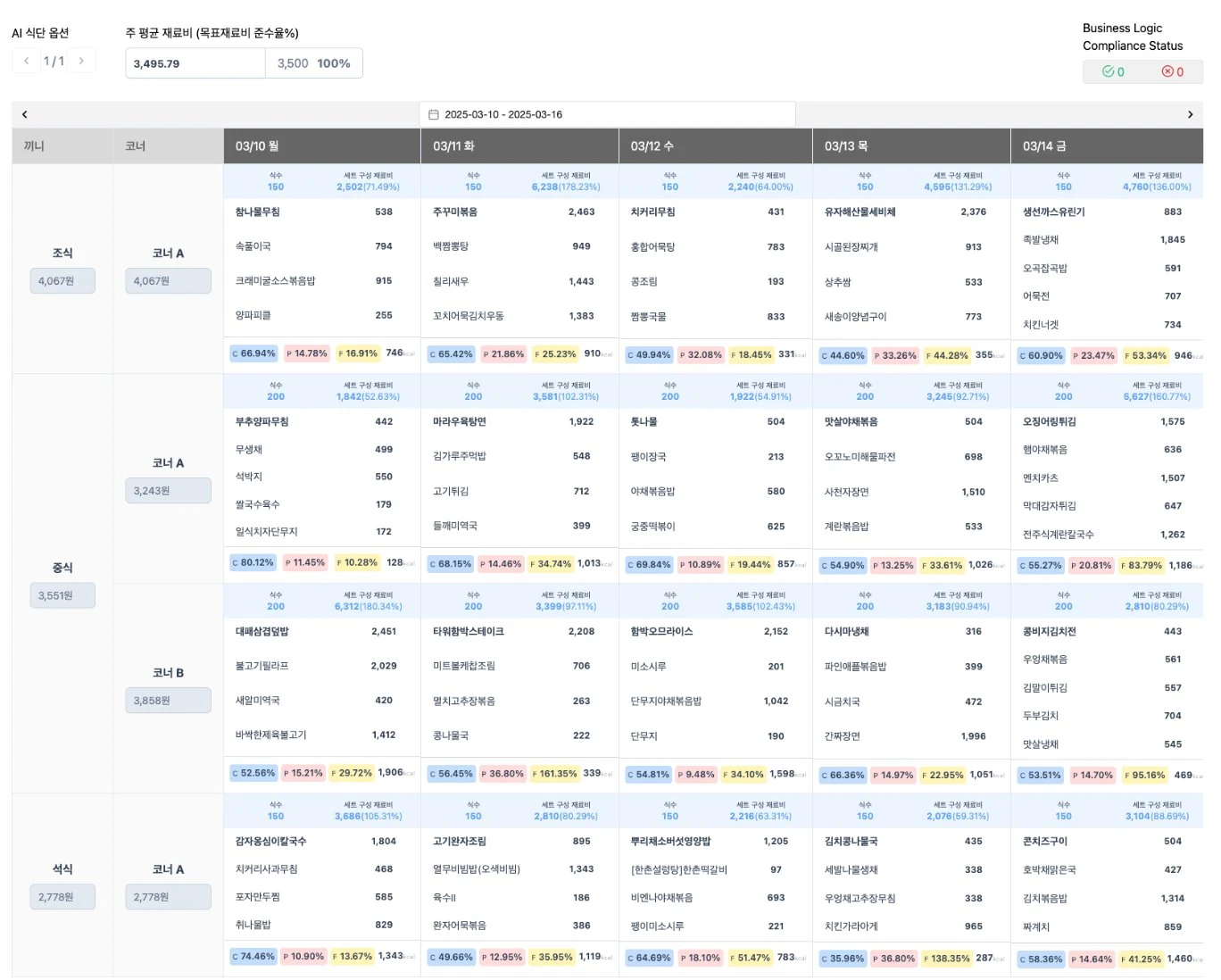
Meal-planning interface and configurable business rules
01 / CONTEXT & CONTRIBUTION
The problem. My part in it.
Background
Menu planning combined nutrition, budget, supply and kitchen limits.
Ingredient changes triggered substitution and cost reviews.
Experienced dietitians held much of the required judgment.
That knowledge needed reuse across sites and junior staff.
Objective
Reduce repeated planning and review work.
Share expertise through recommendations suited to each site.
My role
Joint discovery of the business need and planning problems.
Structured data and rules; aligned scope and acceptance criteria.
02 / SYSTEM DESIGN
How it connects.
Processing / data flowIteration / feedbackService / environment boundary
01
Hard constraints and preferences.
Apply prohibitions and supply conditions to the candidate set, then use site preferences in recommendations. Make priorities and exceptions editable by administrators.
02
Six modules, explicit responsibilities.
Separate classification, enrichment, ingredient optimization, menu composition, period planning and conflict resolution. Align output expectations and acceptance criteria with the customer and engineering team.
Business-rule configuration
03 / RESULTS & SCOPE
The outcome.
−80%Meal-planning time
95%Ingredient recommendation accuracy
99%Within-budget meal plans
Figures reported in the project presentation. My contribution: business rules, data and slots, scope and acceptance criteria.